

Introduction
If you’re a fan of sushi or Korean cuisine, Spicy Tuna Kimbap offers the perfect blend of both worlds. Kimbap, a popular Korean dish, combines seasoned rice with various fillings, all rolled up in a sheet of seaweed. By infusing the traditional Kimbap recipe with spicy tuna, you get a delicious, flavorful twist that adds a burst of heat to the savory dish. This delightful fusion of textures and tastes makes Spicy Tuna Kimbap a must-try for anyone seeking a fresh and exciting dish. Whether you’re hosting a party, looking for a lunch option, or just craving something new, this recipe will surely impress.
In this article, we will explore the reasons why Spicy Tuna Kimbap is a fantastic dish to try, provide a step-by-step guide to making it, and offer helpful tips and variations to personalize the recipe to suit your tastes. So whether you’re a seasoned Kimbap enthusiast or new to this Korean dish, you’re in for a treat!
Why You’ll Love This Recipe
- Bold and Flavorful: Spicy Tuna Kimbap delivers a delicious punch of flavor with the spicy tuna filling paired with the mild and savory rice and vegetables. The result is an exciting and balanced dish that will tantalize your taste buds.
- Healthy and Nutritious: Kimbap offers a variety of healthy ingredients, from fresh vegetables to lean protein. It’s a great option for those seeking a lighter meal that’s packed with nutrients.
- Customizable: The beauty of Kimbap lies in its versatility. You can mix and match the fillings according to your preferences, allowing you to make a version that’s uniquely yours.
- Quick and Easy: Despite its restaurant-worthy flavor, Spicy Tuna Kimbap is relatively simple and quick to prepare. It’s perfect for anyone who loves making homemade sushi-style dishes.
- No Raw Fish, Halal-Friendly: This version of Spicy Tuna Kimbap uses cooked tuna, making it a Halal-friendly option for anyone who avoids raw fish, pork, or other restricted ingredients.
Preparation Time and Servings
- Total Time: 45 minutes (20 minutes for preparation, 25 minutes for assembling)
- Servings: This recipe makes about 6-8 rolls, depending on how large or small you slice the pieces.
- Nutrition Facts (per serving): Calories: 250, Protein: 15g, Carbs: 30g, Fat: 12g.
Ingredients
For the Spicy Tuna Filling:
- 2 cans of tuna in oil or water (5 oz each), drained and flaked: A rich source of protein and the key ingredient for the filling.
- 3 tablespoons mayonnaise: Adds creaminess to the tuna and enhances the flavor.
- 1 tablespoon gochujang (Korean red chili paste): Provides a spicy kick and gives the filling its signature heat.
- 1 teaspoon sesame oil: Adds a warm, nutty flavor to the tuna mixture.
- 1 teaspoon soy sauce: For a hint of umami that balances the flavors.
- 1 teaspoon sugar: Sweetens the filling and balances the spiciness of the gochujang.
- 1 tablespoon finely chopped green onions: Adds freshness and a mild onion flavor.
For the Rice:
- 2 cups sushi rice: This short-grain rice is sticky, which is perfect for rolling Kimbap.
- 2 ½ cups water: For cooking the rice.
- 1 tablespoon rice vinegar: For seasoning the rice and giving it that signature tangy flavor.
- 1 tablespoon sugar: To balance the tanginess of the rice vinegar.
- ½ teaspoon salt: To season the rice.
For the Vegetables and Garnish:
- 1 medium cucumber, julienned: Adds crunch and freshness.
- 1 large carrot, julienned: For a touch of sweetness and vibrant color.
- 4-5 large spinach leaves, blanched and drained: Adds earthy flavor and a nice contrast to the spiciness of the tuna.
- 1 avocado, thinly sliced: For a creamy texture that complements the tuna filling.
- 1 sheet roasted seaweed (nori) per roll: The essential wrap that holds everything together.
- Sesame seeds: For garnish and extra crunch.
Optional Additions:
- Pickled radish (danmuji): Adds sweetness and a slight tang that pairs well with the spicy tuna.
- Fried egg: If you want extra protein and a softer texture, you can add a thin layer of scrambled egg to the roll.
Step-by-Step Preparation
FIRST STEP: COOK THE SUSHI RICE
- Rinse the Rice: Begin by rinsing the sushi rice thoroughly under cold water until the water runs clear. This helps remove excess starch and ensures the rice will be sticky enough for rolling.
- Cook the Rice: Add the rinsed rice and water to a rice cooker or a medium-sized pot. Cook according to the instructions for your rice cooker, or bring the rice to a boil on the stove, then reduce the heat to low and cover. Let it simmer for about 20 minutes or until the rice is tender and the water is absorbed.
- Season the Rice: While the rice is still warm, mix the rice vinegar, sugar, and salt in a small bowl. Stir until the sugar dissolves, then pour the mixture over the rice. Use a wooden spatula or rice paddle to gently fold the seasoning into the rice, being careful not to mash the grains. Let the rice cool to room temperature before using.
SECOND STEP: PREPARE THE SPICY TUNA FILLING
- Prepare the Tuna: Open the cans of tuna and drain any excess liquid. Flake the tuna with a fork until it reaches a fine, shredded texture.
- Mix the Ingredients: In a medium-sized bowl, combine the tuna, mayonnaise, gochujang, sesame oil, soy sauce, sugar, and chopped green onions. Stir the mixture until all the ingredients are evenly incorporated. Taste the filling and adjust the seasoning if necessary, adding more gochujang for spiciness or more mayonnaise for creaminess.
THIRD STEP: PREPARE THE VEGETABLES
- Julienne the Vegetables: Slice the cucumber and carrot into thin strips. This ensures they’ll fit neatly inside the Kimbap rolls.
- Blanch the Spinach: In a small pot of boiling water, blanch the spinach leaves for about 1 minute, just until they turn bright green. Drain and rinse under cold water to stop the cooking process. Gently squeeze out excess water and chop the spinach into smaller pieces.
- Prepare the Avocado: Slice the avocado in half, remove the pit, and then cut the flesh into thin slices.
FOURTH STEP: ASSEMBLE THE KIMBAP
- Set Up Your Rolling Station: Lay a bamboo sushi rolling mat on a flat surface, and place a sheet of seaweed (nori) on top, shiny side down. Have a bowl of water nearby to dip your fingers in as you work, to prevent the rice from sticking.
- Spread the Rice: Using your fingers or a spatula, spread an even layer of cooled sushi rice over the nori, leaving about 1 inch of empty space at the top edge of the sheet. Press the rice down gently to ensure it sticks.
- Add the Filling: In the center of the rice, layer a few spoonfuls of the spicy tuna mixture, followed by a few slices of cucumber, carrot, spinach, and avocado.
- Roll the Kimbap: Start rolling from the bottom edge of the nori, using the bamboo mat to help guide the roll tightly without squishing the ingredients. When you reach the top edge, wet it with a bit of water to seal the roll.
- Slice the Kimbap: Using a sharp knife, slice the rolled Kimbap into bite-sized pieces. Clean the knife between cuts to keep the slices neat and tidy.
FINAL STEP: GARNISH AND SERVE
- Garnish with Sesame Seeds: After slicing, sprinkle the Kimbap rolls with sesame seeds for extra flavor and crunch.
- Serve: Arrange the Spicy Tuna Kimbap on a platter and serve immediately with optional side dishes like kimchi, pickled radish, or a bowl of miso soup.
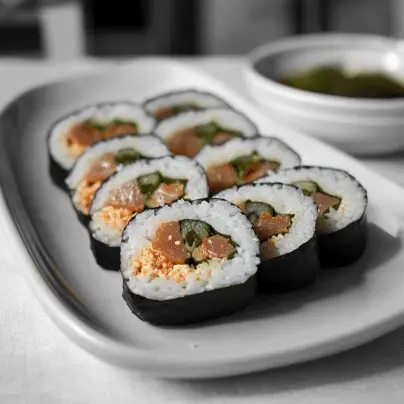
How to Serve Spicy Tuna Kimbap
Spicy Tuna Kimbap is a delightful dish that works well for a variety of occasions. Here are some great serving ideas:
1. As a Quick Meal
This dish is perfect for a light lunch or dinner. The combination of rice, protein, and vegetables provides a balanced meal that’s both satisfying and refreshing.
2. As a Party Snack
Kimbap is easy to make in large batches, making it ideal for parties and gatherings. Serve it on a platter as an appetizer or finger food, and watch your guests go back for seconds.
3. Pair with Soup
Serve Spicy Tuna Kimbap with a light soup such as miso soup or a spicy kimchi stew for a comforting, well-rounded meal.
4. As a Picnic Delight
Pack Spicy Tuna Kimbap for a picnic or a bento box. It’s portable, easy to eat, and won’t get soggy, making it the perfect travel-friendly dish.
Additional Tips
- Make Ahead: You can prepare the spicy tuna filling and vegetables in advance. Keep the rice and seaweed separate until ready to assemble, as the seaweed can get soggy if left too long in contact with the rice.
- Storage: If you have leftovers, store the Kimbap in an airtight container in the refrigerator for up to 2 days. It’s best enjoyed fresh but can be eaten cold the next day.
- Rice Tips: If the rice becomes too sticky while rolling, lightly wet your hands with water to help manage it.
Recipe Variations
While Spicy Tuna Kimbap is delicious on its own, here are some ideas for variations:
1. Add Extra Protein
You can add extra protein such as cooked shrimp, grilled chicken, or even tofu for a vegetarian option. These additions will complement the spicy tuna and make your Kimbap even more filling.
2. Experiment with Sauces
For added depth of flavor, try drizzling your Kimbap with soy sauce, spicy mayo, or even a bit of sriracha for extra heat.
3. Make It Vegan
For a vegan-friendly version, substitute the tuna with marinated tempeh or mushrooms for a meaty texture and flavor. Replace the mayonnaise with a plant-based alternative.
Freezing and Storage
Spicy Tuna Kimbap is best enjoyed fresh, but if you need to store leftovers, wrap them tightly in plastic wrap and refrigerate for up to 2 days. Reheat by briefly microwaving or enjoying them cold.
Special Equipment
- Bamboo Sushi Rolling Mat: Helps to tightly roll the Kimbap.
- Sharp Knife: For slicing the rolls neatly without squashing the ingredients.
Frequently Asked Questions
- Can I use canned tuna in water? Yes! Canned tuna in water will work just as well as tuna in oil. Just make sure to drain it thoroughly.
- Can I make Kimbap without a bamboo mat? Yes, you can roll Kimbap by hand, though a bamboo mat makes the process easier and ensures even, tight rolls.
- Can I make Spicy Tuna Kimbap without gochujang? Yes! You can substitute gochujang with other chili pastes or sauces, or even use sriracha for a different heat profile.
- How do I prevent the Kimbap from getting soggy? Make sure the rice is cooled to room temperature before using it, and avoid overfilling the rolls. Use the rice promptly after preparing to avoid sogginess.
Conclusion
Spicy Tuna Kimbap is a flavorful, versatile, and fun dish that’s perfect for any occasion. Whether you’re enjoying it as a quick meal, serving it at a gathering, or packing it for lunch, Spicy Tuna Kimbap is sure to satisfy your cravings for bold and savory flavors. The combination of spicy tuna, fresh vegetables, and seasoned rice makes this dish truly special. So go ahead and give it a try – you won’t be disappointed! Enjoy every bite!